
WHY THISWORKS FOR EVERYONE
NO PLATFORM FEES
Direct, Simple Connections
QUALITY CONNECTIONS
Genuine Jobs, Real Responses
FASTER TRUST-BUILDING
Clear Profiles & Verified Details
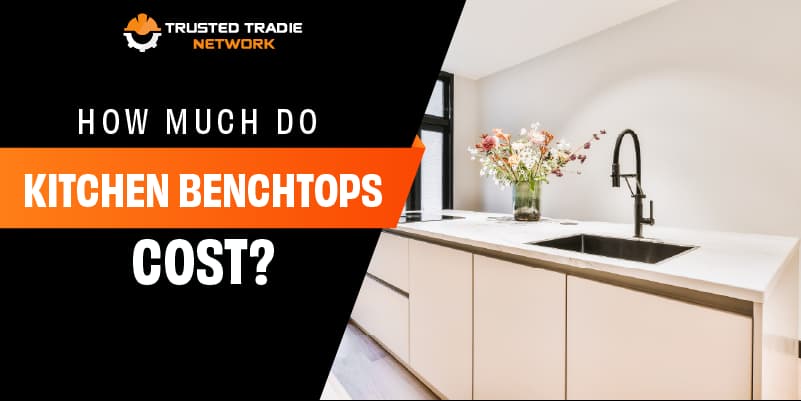
Your kitchen benchtops are one of the first things that people see when entering your kitchen. It is one of the biggest expenses when it comes to renovating your kitchen. The prices can vary from very cheap laminates to high-end natural stones. The prices for a benchtop can differ significantly.
For a country such as Australia, kitchen benchtop cost ranges anywhere from $200 per square meter to as much as $3,000 per square meter, depending on material, complexity, brand, and finish.
Just looking at that pricing can be rather confusing. You have one benchtop that will suit your budget and another one that will blow your entire renovating budget.
Therefore, this guide breaks down the kitchen benchtop prices so that you can understand the prices effectively. Let’s dive deeper into it.
When viewed alongside the full kitchen renovation cost breakdown, benchtops often take up a large share of the total spend. Kitchen benchtop prices vary by material, size, and installation requirements.
The average kitchen benchtop cost begins at $200 per square meter and goes up to as much as $3000 per square meter.
Below is a general cost guide to help you compare options.
|
Benchtop Material |
Average Cost (AUD per m²) |
|
Laminate |
$200 to $600 |
|
Timber |
$600 to $1,200 |
|
Engineered stone |
$700 to $1,800 |
|
Granite |
$900 to $2,200 |
|
Marble |
$1,200 to $3,000 |
|
Concrete |
$1,000 to $2,500 |
|
Stainless steel |
$1,500 to $3,000 |
These prices in the table usually cover the material only. Installation, cut-outs, and edge finishes often add extra costs.
Several factors affect the kitchen benchtop installation cost. Let’s understand these factors in detail.
Engineered stones are always cheaper than natural stones. Engineered stones are more easily available, and they are easier to cut. Granite and marble are more expensive due to natural variation and careful handling during fabrication.
The thicker stones will be more expensive; hence, thicker stones require more material and additional support. The thicker appearance will require additional time for installation.
It is cheapest to make edges with straight corners and square edges. The more cutting and polishing involved in curved or bevelled corners or detailed edges, the higher the price.
Larger kitchens require more stone, thus increasing all the costs associated with the material. The preparation of kitchen islands and peninsulas, as well as corner joints, increases the complexity of the work.
Cut-outs for the sink and cooktop will be an additional expense. Waterfall edges and custom shapes will require extra work for fabrication. This factor affects the prices.
Stone benchtops are heavy and need skilled installers. Difficult access, stairs, or tight spaces can raise labor charges. The more complex the installation, the greater the rise in the cost.
Prices differ from region to region. Metro areas often cost more due to higher demand. Imported stone may also cost more due to transport and supply factors.
When all these elements come together, stone benchtop prices can change significantly from one kitchen to another.
When it comes to installing a benchtop in your kitchen, it should not break your budget. Let’s look at the smart tips so that you can have affordable kitchen benchtops.
Choosing the right material helps you in saving money. Laminate and timber are good examples of modern design at a low cost. They can be used in any kitchen and are easy to replace.
If you want to save on kitchen countertops, choose a simple design. Straight lines are less expensive than curved ones. The fewer cuts and turns mean lower labor costs.
To save money, always compare different quotes. Getting multiple quotes will give you an idea of the reasonable prices. Multiple quotes will help one to detect additional costs that may not be required.
Opt for standard sizes for an effective budget. Custom sizing increases waste and labor time. Standard slab sizes are usually cheaper and install more quickly.
It is always good to plan early. Booking in for installation early means you can avoid the surcharge for a rush. Last-minute changes tend to be costlier and involve some delay in the work.
Choose materials based on how you use the kitchen. A family kitchen may not need premium stone everywhere. This also ties closely with choosing between custom and flatpack cabinetry, as cabinetry style can influence benchtop layout and cost.
A good benchtop requires proper installation. Platforms like Trusted Tradie Network assist homeowners in finding reputable professionals for kitchen jobs. All listed professionals undergo evaluation to determine experience, credentials, and trustworthiness.
Finding professional installers becomes less complicated. It becomes simple to choose among several professionals without having to waste time. Reliable work ensures proper installation of your benchtop to look great from its very first day. There is less worry when you look for professional assistance to handle complex jobs.
When quality matters, having access to trusted professionals makes the process smoother and less stressful.
Kitchen benchtop costs differ widely, but understanding the reasons behind the prices makes the choice easier. In Australia, kitchen benchtop replacement cost depends on the material, size, and finishing.
Stone benchtops cost more due to material quality and installation requirements, while simpler options suit tighter budgets. By planning early, comparing quotes, and choosing designs wisely, you can control costs without sacrificing style.
A benchtop is a long-term feature, so value matters as much as appearance. With the right information and the right installer, you can invest with confidence and enjoy your kitchen for years to come.
Kitchen benchtops in Australia usually cost between $200 and $3,000 per square metre. Prices depend on the material, thickness, finish, and kitchen size. Budget options sit at the lower end, while natural stone and custom designs cost more.
Laminate is the cheapest kitchen benchtop material. It offers many colors and patterns, costs less to install, and suits budget renovations. It is also lightweight, which helps keep labor costs lower compared to stone or concrete options.
Marble and premium natural stone benchtops are the most expensive. Their cost comes from high-quality slabs, careful cutting, and skilled installation. Custom edges, thicker slabs, and waterfall designs can push prices even higher.
Yes, installation usually costs extra. It may include removal of the old benchtop, labor, cutouts for sinks or cooktops, and edge finishing. Complex layouts or heavy stone materials often increase installation charges.
Resurfacing is cheaper for minor wear or cosmetic updates. Replacement is better when the benchtop is damaged, outdated, or poorly fitted. Replacing also allows layout changes and access to more durable materials.