WHY THISWORKS FOR EVERYONE
NO PLATFORM FEES
Direct, Simple Connections
QUALITY CONNECTIONS
Genuine Jobs, Real Responses
FASTER TRUST-BUILDING
Clear Profiles & Verified Details
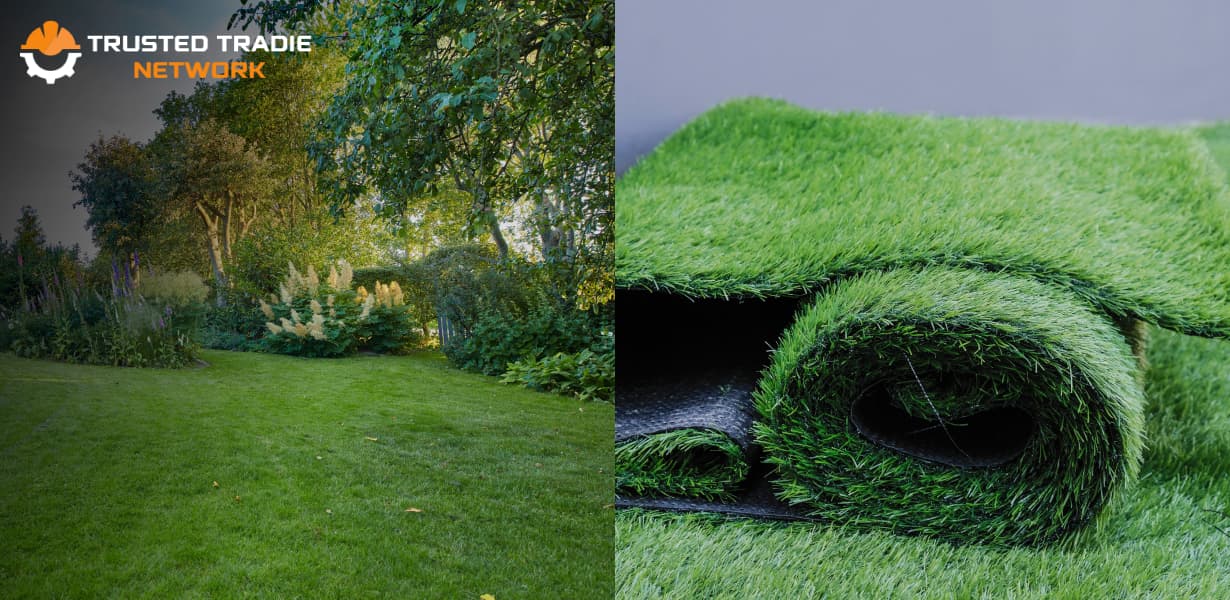
On average, artificial grass installation cost ($70–$140 per m²) in Australia starts from $70 per m² and goes up to $140 per m² depending on turf type, base prep, and site needs. A basic backyard of 40 m² often costs between $3,000 and $5,000 when you add turf, edging, labor, and site prep. Some homes fall outside this range, but most land in this band.
This guide walks you through the fake grass installation cost and synthetic turf prices. You will see price tables, clear steps, and artificial grass cost per square meter, with simple tips that help you plan your yard upgrade with no surprises. Let’s dive deeper into it.
Synthetic grass work is simple on the surface, but the price can shift a lot based on grass grade, base depth, site shape, and other extras. Most homes fall between $70 and $140 per m² for full supply and installation. Some smaller jobs cost more per meter because the setup time stays the same, even if the job is tiny. Large open areas tend to cost less per meter.
Below is a table with the most common artificial grass cost per square metre in Australia.
|
Job Size |
Low Range |
High Range |
Notes |
|
10–20 m² |
$90–$130 per m² |
Higher due to setup time |
Small courtyards, tight spaces |
|
30–60 m² |
$70–$120 per m² |
Standard homes |
Most common cost band |
|
70–100+ m² |
$65–$110 per m² |
Lower due to scale |
Schools, play areas, and large yards |
This range includes turf, base prep, sand infill, and labor. If your site needs waste removal, drainage, or leveling, the final number may sit at the higher end.
Every yard has its own layout and soil type. Price changes happen for simple reasons. Once you understand them, you can judge quotes fairly. Below are the main parts that shift the total number.
Higher quality turf looks natural, feels soft, and has strong backings that hold shape for years. Cheaper turf may flatten early, fade fast, or hold heat more. Good turf from trusted suppliers usually lasts 10–15 years with normal home use.
|
Turf Grade |
Look & Feel |
Expected Price Impact |
|
Basic |
Short, flat, basic green |
Budget-friendly |
|
Mid-Range |
Soft, natural blend, strong backing |
Most homes pick this |
|
Premium |
Thick, plush, multi-tone fibres |
Highest cost per metre |
A premium range may add $15–$30 per m² to your job, but it usually looks the most natural in the Australian sun.
The synthetic grass cost ($20–$50 per m² for turf only) is often used by homeowners, but keep in mind this only covers the turf itself, not the full job.
The sub-base supports the turf, keeping it firm for years. Weak prep causes dips, water pools, or loose edges. Skilled tradies spend a significant amount of time on this because a solid base makes or breaks the final look.
Base work steps include:
Clear old grass or debris.
Level the soil.
Add crushed rock.
Compact the base.
Add crusher dust or sand.
Final checks before turf rolls go down.
Each layer adds time and materials. Homes with poor drainage or uneven soil may need extra work, which lifts the price.
Simple, open spaces are quick to work on. Curved shapes, tight access, and lots of edges add time. If a crew needs to carry turf rolls through a narrow side path or cut many shapes, the price increases.
For example:
A simple 5x7 m yard costs less.
A yard with stepping stones, trees, or curves costs more.
A rooftop or balcony job often costs extra due to difficult access.
Most labor charges include preparation, laying turf, trimming edges, joining seams, and tidying up. Labor for turf installers ranges between $30 and $55 per m², depending on region and job complexity.
Locations like Sydney or Melbourne may sit at the higher end. Regional areas cost less, but travel fees can bring the total back up.
Different turf styles have different price tags. Some are meant for homes, others for kids’ play zones or sports. The artificial turf cost ($20–$50 per m² for turf only) covers all types, but you will see the numbers vary based on the grade.
|
Turf Type |
Use Case |
Price Impact |
|
Short pile |
Patios, balconies |
Low |
|
Mid pile |
Homes, gardens |
Medium |
|
Long pile |
High-end homes |
Higher |
|
Sports turf |
Soccer, cricket, and play |
Medium–High |
If you need line markings, shock pads, or rubber underlay (common in play areas), the price increases.
Good edging keeps turf tight and clean. Many jobs use timber, metal, or concrete borders. Prices shift based on style and length.
Common edging types include:
|
Edging Type |
Cost Impact |
Notes |
|
Timber |
Low |
Basic and neat |
|
Metal |
Medium |
Strong and tidy |
|
Concrete |
Higher |
Good for long-term jobs |
Edging costs $10 to $45 per linear meter, depending on the material.
Some yards hold water. If water sits under turf, it can cause odor or softness. Sand, drains, or small channels fix this.
If your site has heavy clay, drainage work can add $300 to $1,000 to a job. If you only need minor sand or soil fixes, it is usually much lower.
Removing old grass and soil often adds $200 to $600, depending on how much waste sits in your yard. Truck access also affects this. If a ute or small trailer is used instead of a tipper, the cost rises.
Some homeowners try to cut costs by laying turf themselves. The problem is that the base often ends up soft or uneven. You may save money in the short term, but the turf may not last long.
Professional crews give better compaction, cleaner joints, and long-term stability. When you add up tool hire, sand, gravel, waste fees, and time, DIY often ends up close to the cost of hiring someone.
The grass installation cost ($70–$140 per m²) sometimes shows up online when people compare DIY vs. professional options. Most pros suggest leaving the technical parts to trained installers.
When people search for turf, many ask about the cost of artificial grass per m². It normally sits between $20 and $50 per m² for turf only. Full supply and installation usually runs $70 to $140 per m².
Below is a table to help you compare turf-only prices.
|
Turf Grade |
Price per m² |
Notes |
|
Basic |
$20–$25 |
Short and simple |
|
Mid-Range |
$25–$35 |
Most homes pick this |
|
Premium |
$40–$50 |
Plush, natural look |
A good way to judge the full cost is to look at the entire job. This includes turf, base, labor, edging, sand, and cleanup. This part often gets missed when people compare synthetic grass prices ($20–$50 per m² for turf only), so here is what a typical Australian project looks like.
The table shows the sample cost for a 40 m² yard:
|
Item |
Estimated Cost |
|
Turf rolls |
$1,200–$1,800 |
|
Base prep |
$900–$1,600 |
|
Labour |
$1,000–$2,000 |
|
Edging |
$200–$600 |
|
Sand infill |
$80–$150 |
|
Waste removal |
$150–$300 |
|
Total |
$3,500–$6,000 |
Some homeowners compare turf to concrete, pavers, or real grass. Synthetic turf has a higher upfront cost but a lower long-term cost because it needs almost no care.
This is helpful for busy families, rental homes, and small yards.
Even though turf needs little work, you still need to brush it now and then, remove leaves, and rinse pet areas. You may spend $50 per year on small tools or deodorising products.
Real grass costs far more in water, mowing, weed care, and fertilizer. This is why turf wins long-term.
The artificial lawn cost ($3,000–$6,000 for a 40 m² yard) is often discussed when people compare lifetime prices rather than the initial bill.
Many homeowners ask about the full process. Here is a quick look at the steps:
Remove old grass, rocks, weeds, and any rubbish from the yard. A clean space helps the new turf sit flat and look neat.
Smooth out bumps and fill any low spots in the ground. This makes the surface even, so the turf won’t sag later.
Spread crushed rock and sand across the area. This base gives the turf strong support and good drainage.
Use a compactor to press the base down firmly. A tight base stops dips and keeps the turf steady.
Unroll the turf and place each piece in the same blade direction. This helps the whole lawn look natural and even.
Place the join tape under the seams and apply glue to hold the pieces together. Good job stopping visible lines on the lawn.
Spread sand across the turf and brush it in well. The sand helps the blades stand upright and adds weight to keep the turf in place.
Brush the grass one more time so the blades lift and look fresh. Check all edges, trim loose bits, and clean the area for a tidy finish.
If you need a quick way to judge prices, here is a simple artificial grass cost guide. It helps you match your home type with the most likely cost band.
|
Home Type |
Likely Cost per m² |
Notes |
|
Small homes |
$90–$130 |
Higher due to setup time |
|
Medium homes |
$70–$120 |
Most common |
|
Large yards |
$65–$110 |
Lower due to scale |
|
Balconies |
$90–$150 |
Extra labour in tight spaces |
Finding skilled turf installers can be hard when you are not sure who to call. The Trusted Tradie Network gives you a clean way to connect with pros who know the right methods, use good turf grades, and deliver fair quotes. You can browse services, check categories, and speak with trained tradies who work on real yards across Australia.
The platform makes it simple to check skills, compare services, and plan your job in a stress-free way. If you want a neat yard that stays green and clean through all seasons, the right installer makes a clear difference.
Synthetic turf gives Australian homes a clean, green yard with almost no upkeep. The total price sits between $70 and $140 per m² for most jobs, with site shape, turf grade, and base work affecting the final number. When you judge your options, focus on long-term value, not just the cheapest quote. Use the cost tables and steps in this guide to compare your choices in a simple way.
If you want a smooth job with neat edges and clean joins, speak with a skilled installer. The right work gives you a natural look that holds shape for years. Your yard stays green, tidy, and ready for daily use in all seasons.
Most synthetic grass in Australia costs $20 to $50 per m² for the turf. If you want a full installation, the price is usually $70 to $140 per m². The final cost depends on the type of grass and the work your yard needs.
Most homes pay $3,000 to $6,000 for a normal-sized yard. Small courtyards cost less. Bigger yards cost more because they need more turf and more labor.
Yes. Synthetic turf handles heat, rain, kids, pets, and daily use. It stays green all year and needs very little care, which makes it popular during dry months.
Fake grass stays in good shape for 10 to 15 years. Good-quality turf lasts longer, especially in sunny places like Perth, Brisbane, and Adelaide.
It can get warm in the strong sun. Many people use cooling infill or pick lighter colours to keep the surface cooler. New turf types made for Australia help reduce heat as well.
Yes. Dogs can play, run, and use it daily. A good base and good drainage stop smells and make cleaning easy.