
WHY THISWORKS FOR EVERYONE
NO PLATFORM FEES
Direct, Simple Connections
QUALITY CONNECTIONS
Genuine Jobs, Real Responses
FASTER TRUST-BUILDING
Clear Profiles & Verified Details
A bright afternoon can quickly become rainy in minutes in Australia. You can be enjoying the outdoors one minute and rushing for cover the next. This is where well-designed outdoor areas can make all the difference.
The right pergola roofing will ensure that your outdoor area remains functional in rain, sun, and season. Today, homeowners are looking for outdoor spaces that are an extension of their home. A waterproof pergola roof helps in achieving this. It creates a dry, shaded spot that feels welcoming all year.
This blog explains the benefits of waterproof pergola roof. Let’s understand these benefits in detail.
A waterproof pergola roof is designed to keep the rain out while still allowing sunlight and ventilation. Unlike open-slatted or fabric covers, a waterproof roof uses solid materials to cover the top of the structure.
Some common materials used for pergola roofing ideas include polycarbonate roofing, metal roofing, or insulated roofing. The idea behind a waterproof roof is simple. It is meant to keep the area below dry and comfortable. Pergola roof ideas are particularly useful in Australia, where the weather can change quickly.
An outdoor pergola roof comes with several advantages. Let’s look at these key benefits in detail.
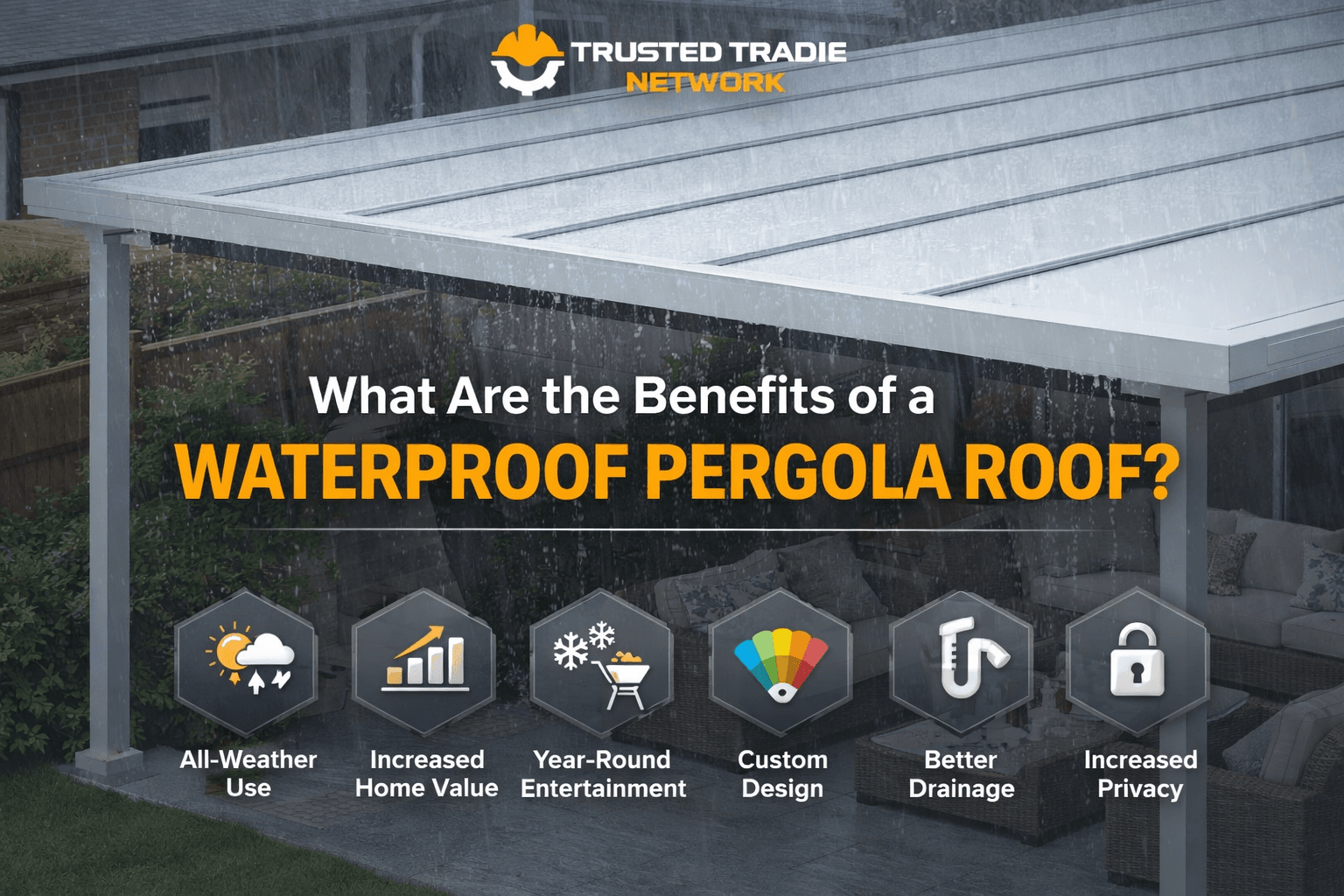
Rain should not be a factor when you use your outdoor space. A weatherproof pergola roof will keep your furniture, flooring, and decor dry. You can eat, relax, or have friends over without having to check the weather. The roof directs the water away, so there are no puddles or leaks. This will also save your timber and outdoor fixtures in the long run.
The Australian sun can be very strong. A pergola covering will shield the sun and reduce the heat in the area. This will make the area cooler and safe during hot days. It will also protect the skin and eyes during long hours of staying under the sun. The area will be more comfortable, and people will be encouraged to use it.
An outdoor area should not be left empty for half the year. Pergola roof rain protection keeps the outdoor area dry and usable. Rain, bright sun, or cold weather does not send you inside. With lights or heaters, the area is even more functional. This functionality makes the pergola a part of daily living, rather than a fair-weather area.
Water-resistant roofing materials are designed to withstand harsh weather conditions. They are rust-resistant, less prone to warping and cracking, and will last longer if properly installed. This quality makes them ideal for use in areas that are close to the ocean, hot zones, and regions that receive a lot of rainfall.
Open pergolas tend to collect debris and harbor water. A pergola shade roof will eliminate these problems. Leaves will slide off easily, and water will drain. Cleaning will be faster and less frequent. Many materials require only a simple cleaning to keep them fresh. This will save time and energy over the life of the pergola.
Outdoor living areas are attractive to potential buyers. A pergola roof for all weather is complete and functional. It demonstrates that the area can be used regardless of the weather, not just on sunny days. This aspect can enhance the attractiveness of the property. Many potential buyers view it as an additional living area.
Waterproof pergola roofs come in many styles and colors. They can match modern or classic homes with ease. Options allow control over light levels, insulation, and finish. This makes it easier to blend the pergola with the rest of the property. Good design keeps the space inviting.
Furniture, grills, and plants deteriorate faster when exposed to rain, sunlight, and harsh weather conditions. A waterproof roof prevents fading, swelling, and rust. This decreases the cost of replacements in the long run. It also keeps the area clean and ready for use at all times.
For many homeowners, the answer is yes, it is worth the investment. The price provides obvious value for money in terms of comfort and functionality. You get an area that functions regardless of the weather and is useful for your daily needs.
Eventually, you will see savings in terms of minimized repairs and durable furniture. The pergola roof design will become an integral part of how the house functions, rather than an added benefit.
The pergola roof becomes part of how the home functions, not just an add-on. At this stage, understanding what to choose between timber vs aluminium pergolas for Australian homes helps homeowners choose a structure that supports long-term performance
In Australia, where living outdoors is part of the culture, this upgrade is worth considering. The value for money is in the frequency of use and its durability. When planned and installed well, the investment pays back through enjoyment and added appeal.
Selecting the best pergola roof types is not the only consideration. Proper installation is also important. Trusted Tradie Network assists in connecting homeowners with reputable pergola roof installation professionals in Australia.
Each professional is screened for experience, credentials, and reviews. This ensures that it is easier to identify professionals who are knowledgeable about the local climate and building requirements.
Homeowners can view several profiles and make a decision with confidence. This will ensure that the pergola roof works well and lasts longer when installed correctly. Trusted Tradie Network supports informed decisions for quality outdoor projects.
A pergola is something that should encourage you to go outside, not keep you locked away when clouds appear. A waterproof roof makes a big difference in the way your outdoor area functions.
It provides shelter, comfort, and security from the elements. In Australia, this is more important than ever. The advantages go well beyond protecting you from the rain.
You gain shade, privacy, strength, and better use of your home. A waterproof pergola roof is the way to go if you want an outdoor area that lasts longer.
In Australia, a waterproof pergola roof usually costs from around $3,000 for simple designs to more than $25,000 for large custom builds. The final price depends on materials, pergola size, design complexity, and professional installation costs.
Most outdoor areas can support a waterproof pergola roof. Space size, ground stability, and nearby structures matter. A professional assessment helps confirm suitability and ensures the roof design fits local building rules and weather conditions.
A waterproof pergola roof protects well against rain and strong sun. It also helps during light wind. However, extreme storms or cyclonic conditions may need reinforced designs to ensure safety and long-term performance.
Common materials include polycarbonate sheets, Colorbond steel, insulated panels, and aluminum systems. Each option offers different levels of light control, heat reduction, strength, and style to suit Australian homes and climate needs.
DIY installation is possible for small kits, but it carries risks. Incorrect installation can cause leaks or structural issues. Hiring licensed professionals ensures correct drainage, safe fixing, and compliance with local building standards.